

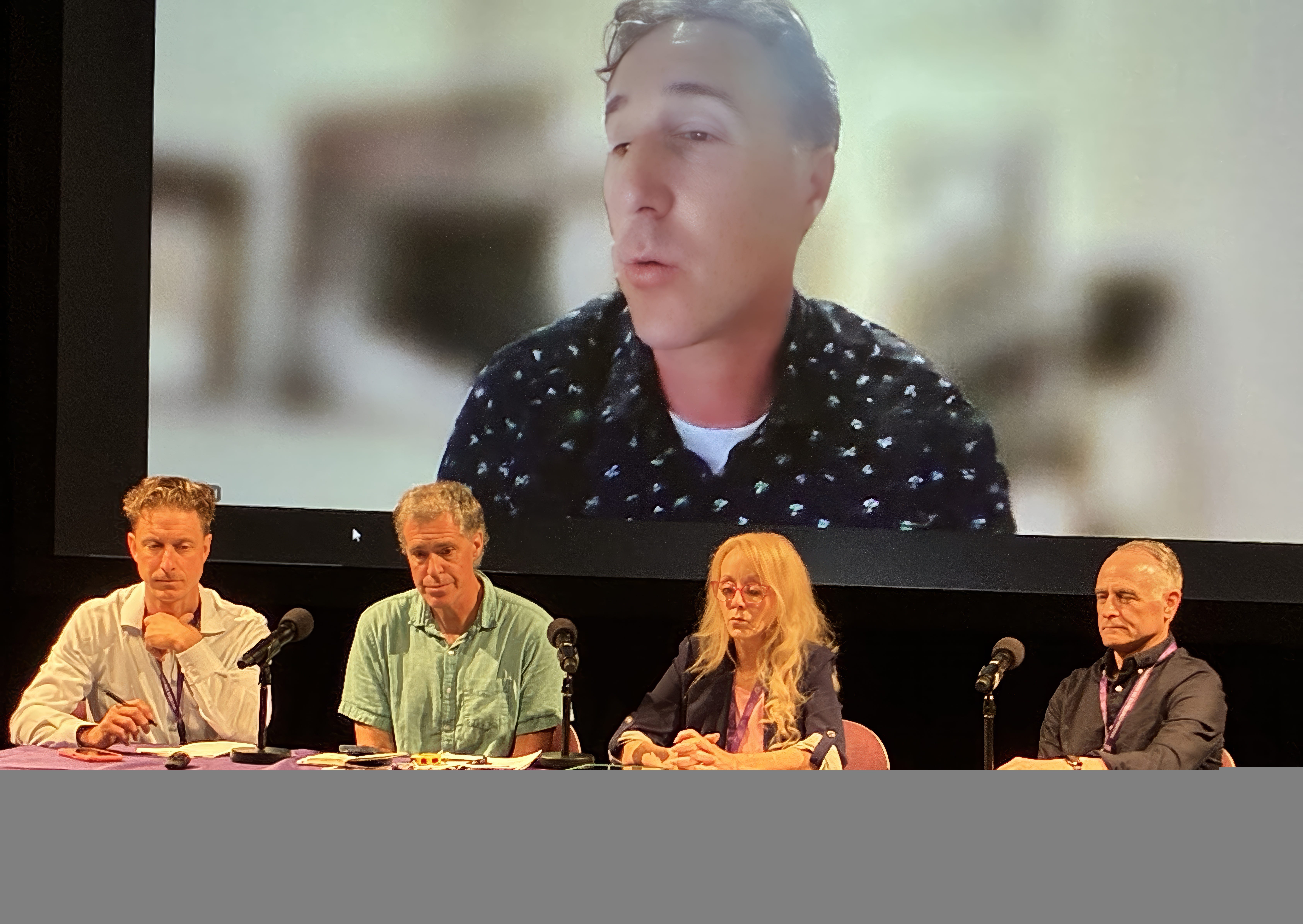
Last week I moderated a panel discussion at the Niagara Conference on Workplace Mobbing. Our panel dug into how a workplace mobbing can snap into a cancelation with one easy step: just add media. But enough about us. Here are a few observations that made their way into my notebook and spurred conversation amongst our group.
Because I don’t know if this was a “no-attribution” or Chatham House rules conference, I’m going to play it safe and not identify any speakers.
Protected is privileged (but not really protected)
“F—k you, Dennis.”
That’s how one presenter’s workplace mobbing got started. A single co-worker, for no reason, taking every opportunity to say “F—k you, Dennis.” Passing each other in the hall: “F—k you, Dennis.” Seeing each other in the break room: “F—k you, Dennis.” If Dennis had his door open and the co-worker walked by… you guessed it: “F—k you, Dennis.”
Things escalated and expanded from there, but that was the seed.
Dennis reported this harassment to his human resources rep. Dennis told the conference what HR told him: had the co-worker said “F—k you, Jew-boy” or “F—k you, queer,” that would be harassment on the basis of a protected category, and they could swoop into action.
But Dennis is not a protected category. He’s merely an individual human being, so there’s nothing they could do.
The other most memorable single sentence from the conference came from a distinguished—in every sense of the word—academic who, during a post-presentation Q&A, said “I have a penis.”
He let that statement hang in the air for a second. “That probably doesn’t surprise any of you to hear that,” he added. He then made a brilliantly lucid exposition, as heartfelt as it was intellectual, on why identitarian constructs are a detriment to understanding individual workplace mobbings and to establishing a rigorous and credible academic discipline to study workplace mobbing.
He was addressing a tension that ran through the conference. On one side were the participants who framed workplace mobbings strongly, if not exclusively, with the concepts and dynamics of identity, intersectionality, and power. On the other were participants who, whatever they may think of such concepts, could not escape the empirical observations that workplace mobbings are among the least discriminatory phenomena in society. No one is safe from the mob, and no identity characteristics confer immunity from cancelation.
Our panel alone offered two refutations of the former group’s approach: we had two straight white heterosexual men who were in positions of authority when they were mobbed and canceled.
Where was their privilege when they most needed to cash in on it?
The thread connecting Dennis’ experience and the academic’s comment is that protecting groups ultimately leaves individuals vulnerable and without recourse. Protected category legislation is “nothing but trouble,” one speaker said. Status-blind protections, which assess the actions rather than targets, are a better avenue.
Moreover, as one presenter convincingly argued, homogeneity is no protection. Within any group, there will always be sufficient differences to identify, isolate, attack, and exile someone who thought they were fully in with the in-group.
Every law is a weapon if you wield it right
Several presentations examined attempts to create administrative, civil, or criminal laws to address workplace mobbing. One talked about lobbying strategies, based on efforts to get a workplace mobbing law through a state legislature. Another looked for lessons from the histories of whistleblower protection laws and domestic violence statutes.
One speaker expressed significant concern about one of the most fundamental laws of nature: the law of unintended consequences. Even the most well-intentioned, diligently crafted, and openly debated laws can end up being counter-productive in any number of ways.
He, too, leaned on whistleblower laws, but this time as a cautionary tale. (Workplace mobbing and whistleblower studies have developed together over decades. Check out the work of Brian Martin if you’re interested.). The term whistleblower, he said, tilts the conversation against the respondent or target of the claim. It presumes and implies that wrong-doing is afoot. Maybe there is. But the claim could just as likely be malicious, vindictive, or spurious, and the claimant is launching an attack from behind the legal protections of whistleblower laws and the elevated cultural status of being a whistleblower.
Overall, the participants were remarkably forthright about the prevalence of false accusations as the sparks for workplace mobbings. This cut across all identity groups and intersections. False accusations don’t discriminate any more than workplace mobbings do.
(article continues after photo)
An interesting corollary to those conversations was a pretty widespread aversion to anonymous reporting. Many participants spoke from experience when they said that anonymous reporting mechanisms don’t need to be “weaponized”—they simply are weapons.
And this is all from people who had never heard of the US Center for SafeSport! (But they have now…)
Sports are an enigma in plain sight
One participant was genuinely surprised to hear that workplace mobbings and cancelations occur in the sports industry. Sports are, well, a team sport. Everyone is working together towards the common goal of victory. Whether you look at it from the perspective of team camaraderie or the fact that division within a team is fatal for success, he thought sports would be a refuge.
Throughout the conference, “tall poppy syndrome” kept coming up as a motivation behind many workplace mobbings.
Being different and standing out for any reason makes you a target. People who outperform expectations or, worse, outperform their co-workers walk around wearing bull’s-eyes. So are people who attempt to change an institution, even if they were specifically—in some cases, publicly—hired to reform the organization.
Two asides. First, this can be a bit self-serving. “I was targeted because I’m exceptionally excellent” is an attractive narrative for anyone, let alone someone trying to understand and rebuild after this sort of experience. Second, even the participants who argued that differences in identity characteristics were sufficient and maybe necessary to trigger a mobbing ultimately talked their way to superior performance—excellence—as the most significant difference between the individual and the mob.
The person who thought he wouldn’t encounter any sports people at a workplace mobbing conference was perhaps a bit naive.
Another person approached me from a perspective of hard-bitten puzzlement. She asked point blank what I could possibly enjoy or find fulfilling about coaching. She thought I was too smart, creative, decent, or monotony-averse to be a coach. Her last and only experience with a coach was in middle school, where coaching entailed telling the athletes to run another lap, yelling at them to work harder or run faster, and to do more (MOAR!) push-ups or sprints or whatever.
Going along with the “envy of excellence” theme, I’m increasingly thinking that the better a coach is, the more likely they will be the target of a mobbing or cancelation, and the harder it will hit them.
The first person needed to hear about some of the darker aspects of competitive sport: athletes who are unwilling to adapt to the higher demands of a higher level of sport, perhaps after having their whole identity wrapped around being the big fish in the small pond; athletes who are searching for anyone to blame to avoid taking responsibility; athletes who feel cheated out of the accolades they thought they were entitled to; athletes who meet the criteria of the dark triad; and any combination of the foregoing.
If some athletes will cheat or dope to get ahead, why wouldn’t others mob and cancel when they fall short?
The second person needed to hear about the problem-solving challenges of human performance, and the rewards of being a part of someone’s improvement, development and success. We introduced her to the warm aspects of sport: the long hours spent together, the inside jokes that last a lifetime, attending weddings and receiving birth announcements years later, driving home from training with five pounds of tomatoes or a couple dozen eggs from an athlete’s backyard farm, the shared journey that ultimately has nothing to do with the athlete’s 1500m PR or Division I scholarship. Everything I talked about in “Three safeguarding violations a day.”
Underlying both conversations are the vulnerabilities that we all carry in this line of work. Going along with the “envy of excellence” theme, I’m increasingly thinking that the better a coach is, the more likely they will be the target of a mobbing or cancelation, and the harder it will hit them.
I try to keep the two sides of my work separate. But one time I was doing a training session with three athletes, and I gently tossed into conversation the situation of a coach whom we all knew who had been canceled. “What do you think about what happened to him?” I asked, and then just stood back and observed.
Maria kept falling back on “Well there must have been something to what people were saying!” She also repeatedly referred back to the many negative things she experienced from a different coach several years earlier. One of the other athletes kept calling her out on this bait-and-switch, pointing out that the canceled coach had never done anything like that: he was a great guy that they all respected, liked working with, and greatly benefited from.
As they wound down a debate that was accentuated by the medicine ball and jump work I had them doing, I said to Maria, “More coaches get taken out for the good things they do than the bad things they do. Think about it. The guy we know and love is cooked. The jerk you’re talking about is still employed.” That’s anecdata, but it’s highly representative anecdata.
Sports are ubiquitous and pervasive in our culture. “Sports are not simply something Americans do: they shape Americans’ thinking,” Bruce Berglund wrote.
Yet most people’s understanding of them is superficial. They have memories of the lowest, most slapdash levels of sport in school or youth clubs; and they see the ultimate refined end-product on TV or social media.
Everything in between is a black box. Inside that box are the ingredients and the playbooks for some of the highest realms of human performance, and for some of the darkest malice that one person can inflict on another.
The former is why I’m a coach. The latter is why I was moderating a panel at a conference on workplace mobbing.
No innocent construction

“my hips are so tight/sore”: text sent by a teenage female athlete to a mid-40s male coach.