

Matthew Rounis is a third-year law student at the University of Colorado. His article Unsafe in Any Sport: The Constitutional and Structural Failure of the U.S. Center for SafeSport was published last year by the Colorado Law Student Scholars journal.
Below are two excerpts from his article, with some commentary from me peppering the second. The first is from his “origin story” on the topic of SafeSport.
The second is on a matter of constitutional law that has allowed the courts to prop up the US Center for SafeSport for the last few years. The main case in question, Navarro v. U.S. Ctr. for SafeSport, had oral arguments at the United States Fourth Circuit Court of Appeals in December, and is awaiting the court’s ruling. The precedent at the center of that controversy, San Francisco Arts & Athletics, Inc. v. United States Olympic Committee (1986), is one that I’ve written about elsewhere, and I’ll take this chance to advance a few points that I haven’t put into article form yet.
Matt’s article is long but very readable, even for non-legal types (i.e., normies), so I encourage you to download it and give it a read.
Excerpts edited for clarity: full court citations and footnotes removed, additional paragraph breaks inserted.
MR: I started figure skating in 2005 at the age of nine. In my career I have been lucky enough to train with some of the most decorated coaches in the world, compete at five national championships, and coach some of the best students I could have asked for. I have personally never been the subject of a SafeSport investigation, and yet my experience as a skater can be divided into a pre-SafeSport time and a post-SafeSport time.
Through my time in figure skating, I saw a culture that gravely needed oversight and reckoning. Despite the hope I felt about the change SafeSport would bring to the skating world and all U.S. sports, I was angered and disappointed with the results.
During my long presence in the sport, I saw a huge shift in culture in 2019 from one where each rink quietly dealt with their drama on their own to one where incidents were sensationalized in the media and formerly private figures were targeted by malicious actors on the internet.
The main catalyst for this was the suicide of John Coughlin, a pairs skater who took his life after a media firestorm around his SafeSport investigation.
The Coughlin case is controversial. Discussing it risks reopening old wounds, but avoiding it would be dishonest. It was a defining moment in SafeSport’s history, one of the earliest tests of how it handles the area between accusation and reputation, and, due to SafeSport’s broad confidentiality measures, one of the only ones with public information readily available.
After I retired from competitive skating, I proudly helped build a skating community as a coach. I soon saw my community be greatly affected and harmed by the actions of SafeSport.
Through my first two years in law school I have interviewed former skaters and parents of skaters and skating-adjacent parties in order to ascertain their experiences with the culture of skating and the SafeSport system. In addition, I have discussed SafeSport’s system for protecting victims with constitutional law professors, sexual assault investigators, and civil procedure experts. What I found, and what this article argues, is that SafeSport, though designed to protect athletes, now exercises quasi-judicial power without the procedural safeguards or public accountability necessary for legitimate governance.
...
Navarro v. U.S. Center for SafeSport relied heavily on San Francisco Arts and Athletics v. USOC.
San Francisco Arts and Athletics held that the USOC was not a state actor, reasoning that its congressional charter and statutory rights—specifically, exclusive control over the word “Olympic”—did not amount to government control or delegation of a public function.
But that case involved a limited trademark dispute, an issue with no bearing on SafeSport’s quasi-adjudicative role. That distinction matters.
As the Supreme Court emphasized in Jackson v. Metropolitan Edison Co. (1974), the state action doctrine applies only when a private actor’s specific conduct is fairly attributable to the state and implicates constitutional rights.
The court in Navarro adopted SFAA’s reasoning without grappling with the fact that SafeSport, unlike the USOC, exercises adjudicative authority over individuals pursuant to a congressionally mandated scheme. It also neglected to engage with the entwinement analysis articulated in Brentwood, which recognizes that even absent formal government creation or direct control, sustained entanglement with public actors and delegated authority over public functions can render a nominally private entity a state actor.
GP: The Center, its lawyers, and safeguarding advocates would argue that nothing the Center does “implicates constitutional rights.” There is no right to participate in sport, they argue. Even if there was, that would not apply here.
The Center, their argument goes, moderates membership and eligibility decisions for private entities: the USOPC and the national governing bodies. No one has a constitutional right to belong to any private organization. Membership in any organization is a privilege, not a right—a phrase you will see and hear repeatedly from the Center and its preferred external counsel.
MR: The Navarro court failed to distinguish SafeSport’s unique role from the broader administration of amateur sports.
By framing its adjudicative authority as merely another form of “coordination,” the opinion ignored the reality that SafeSport performs a congressionally delegated public function: imposing binding, government endorsed disciplinary sanctions that determine access to Olympic and Paralympic sport.
In Lebron, the Court made clear that what matters is not how the entity is described, but whether it serves public ends under the direction or influence of the government, a standard that SafeSport clearly meets.
Navarro ignored the practical reality that SafeSport operates as the final arbiter of eligibility in Olympic and Paralympic sports, a role with profound reputational and economic consequences. While SafeSport is nominally private, its statutory mandate, exclusive disciplinary jurisdiction, and control over a public-facing registry of alleged abusers place it squarely within the state action doctrine under Lebron. It is not merely coordinating amateur sports, but administering federally authorized, coercive discipline, with public consequences and no alternative forum.
GP: POSIWID is a systems theory principle, not a legal one. But it should be. The purpose of a system is what it does. POSIWID.
The US Center for SafeSport investigates and adjudicates claims of wrong-doing; and, if they determine that a violation occurred, they deprive both the respondent (i.e., the accused) and the other 11 million Americans under the Center’s jurisdiction of certain liberty interests.
The SafeSport Code prohibits anyone covered by the Code from knowingly engaging in any sort of sport-related activity with someone that the Center has suspended. That abrogates the right to contract for both the respondent and anyone who may wish to hire, contract with, or otherwise transact with that person. Any extant relationships are, effectively, rendered null and void. Parties to a contract with a suspended individual must immediately breach that contract, or risk being sanctioned themselves, even if both parties mutually and voluntarily wish to maintain the relationship.
By listing people on the Centralized Disciplinary Database, the Center causes irreparable harm to their reputation. While reputation has fallen far down the hierarchy of individual rights, there are common law traditions that assert that individuals have either a property interest or a liberty interest in their reputation. The Center’s public blacklisting impairs one’s right to their reputation regardless of whether you argue from liberty or property.
These are the unavoidable, inevitable, and provable consequences of the Center executing its authority and mission under the Ted Stevens Act and the SafeSport Code.
Whatever else the Center does or does not do with regards to safe guarding American athletes or simply moderating eligibility decisions for private entities, infringing on rights is what it does.
MR: SafeSport matches all three factors from Lebron. It was designated and empowered by Congress, tasked with enforcing public norms around athlete protection, and remains under active congressional supervision through oversight hearings, funding structures, and statutory reporting obligations.
This is a far cry from the circumstances in NCAA v. Tarkanian (1988), a case where the Supreme Court declined to find state action because the NCAA operated independently of any statutory framework, exercised no exclusive public function, and was not created or controlled by the government. SafeSport, by contrast, was empowered by federal statute and operates as the sole adjudicator of abuse complaints within Olympic and Paralympic sports.
SafeSport’s power to issue binding suspensions, publicize misconduct findings, and determine eligibility across the U.S. Olympic and Paralympic movement closely resembles the kind of public functional government control described in Lebron: a congressionally empowered entity serving public ends and operating under continuing federal oversight. While most competitions themselves may be privately organized, SafeSport’s congressionally delegated authority effectively controls access to the entire national amateur sports system, leaving no practical alternative for affected athletes. This is fundamentally different from the passive promotional role at issue in SFAA v. USOC.
GP: One paragraph from the SFAA decision should start the wrecking ball swinging at the entire edifice of the US Center for SafeSport:
“This Court also has found action to be governmental action when the challenged entity performs functions that have been ‘traditionally the exclusive prerogative’ of the Federal Government... Neither the conduct nor the coordination of amateur sports has been a traditional governmental function.”
Few actions are as traditionally exclusive to the government as curtailing individual rights in response to a determination of wrong-doing.
Moreover, this is a function that cannot be delegated. Neither the legislative nor the executive branches can delegate functions that are the sole remit of their co-equal, the judicial branch.
Even if the Center offered the full suite of due process rights that we afford to defendants in criminal and civil courts, its actions would still be constitutionally impermissible. The ability to curtail individual rights is exclusively the function of the government.
MR: SafeSport itself has cited a case called Behagen v. Amateur Basketball Association of the U.S. (10th Cir. 1989), to argue that the Center is a private actor not subject to constitutional constraints. In Behagen, the Tenth Circuit held that the Amateur Basketball Association (a National Governing Body subordinate to the USOC, henceforth ABA) was not a state actor for constitutional purposes. The court reasoned that because the [USOC], which certifies NGBs, was itself not a governmental entity under [SFAA], it followed that a subordinate organization like the ABA could not be one either.
Both the SafeSport Code and arbitral appeals [invoke] Behagen’s reasoning to conclude that SafeSport, like the USOC and NGBs, performs only private functions. However, this posture offers no recognition of SafeSport’s unique statutory origins or its binding disciplinary authority, which includes the power to bar individuals from participation in federally recognized sport.
By lumping SafeSport together with the entities it was created to oversee, this argument misapplies precedent and ignores the significant state action concerns raised in Lebron and Brentwood.
GP: The “lumping” is even shallower than that. The US Center for SafeSport is statutorily independent of the USOPC. But because said statute encompasses the USOPC, the NGBs, and the Center under Section 36 Chapter 2205 of the United States Code, the Center’s advocates argue that court rulings that apply to one of those entities automatically apply to another.
As Paul Sherman, a senior attorney at the Institute for Justice, tweeted on a different matter:
“The Constitution doesn’t care what section of the state code a law is in, it cares what it does.”
MR: The analogy to Behagen, a case concerning an NGB acting under USOC certification, ignores SafeSport’s unique structural role: it is not merely a participant within the Olympic hierarchy, but a federally empowered regulator of that system, tasked with policing misconduct on behalf of Congress. The ABA functioned as a National Governing Body operating under the oversight of the U.S. Olympic Committee (USOC) which the Supreme Court has explicitly held is not a government actor.
By contrast, Congress authorized and empowered SafeSport to investigate and discipline both the USOC and its NGBs as an independent oversight body.
By analogizing itself to a subordinate NGB like the ABA, SafeSport invites a legal framing that undermines its own institutional narrative of oversight and independence. It cannot simultaneously claim to be a watchdog over the Olympic movement and also functionally within it when seeking immunity from constitutional oversight. While the USOC itself is not a state actor, SafeSport’s analogy to USOC-certified NGBs underscores its structural entanglement with the very system it was created to regulate.
This entanglement amplifies, rather than excuses, its need for Constitutional accountability.
SafeSport cannot have it both ways. It cannot simultaneously claim the moral authority of an independent oversight body while invoking analogies that position it as a subordinate in the Olympic hierarchy.
Its statutory origins, exclusive authority, and public consequences make it a textbook example of a private actor performing a publicly delegated regulatory function, precisely the scenario the Court ruled on in Lebron and Brentwood.
...
Congress authorized SafeSport to solve a crisis of accountability. By insulating it from constitutional review, it has replaced one form of unaccountable power (NGBs) with another. Recognizing state action restores the balance. In its current form, SafeSport’s unchecked authority is shaped less by law and more by the unpredictable forces of public opinion, which in skating is largely funneled through the sport’s rumor-driven media ecosystem.
That sets Matt up for his next section. As you’ll see from the title, it hits straight at the core of my work, laying out how the Center is a vehicle for cancelations:
When Law Fails, Narrative Rules: Media Based Enforcement in the Absence of Due Process
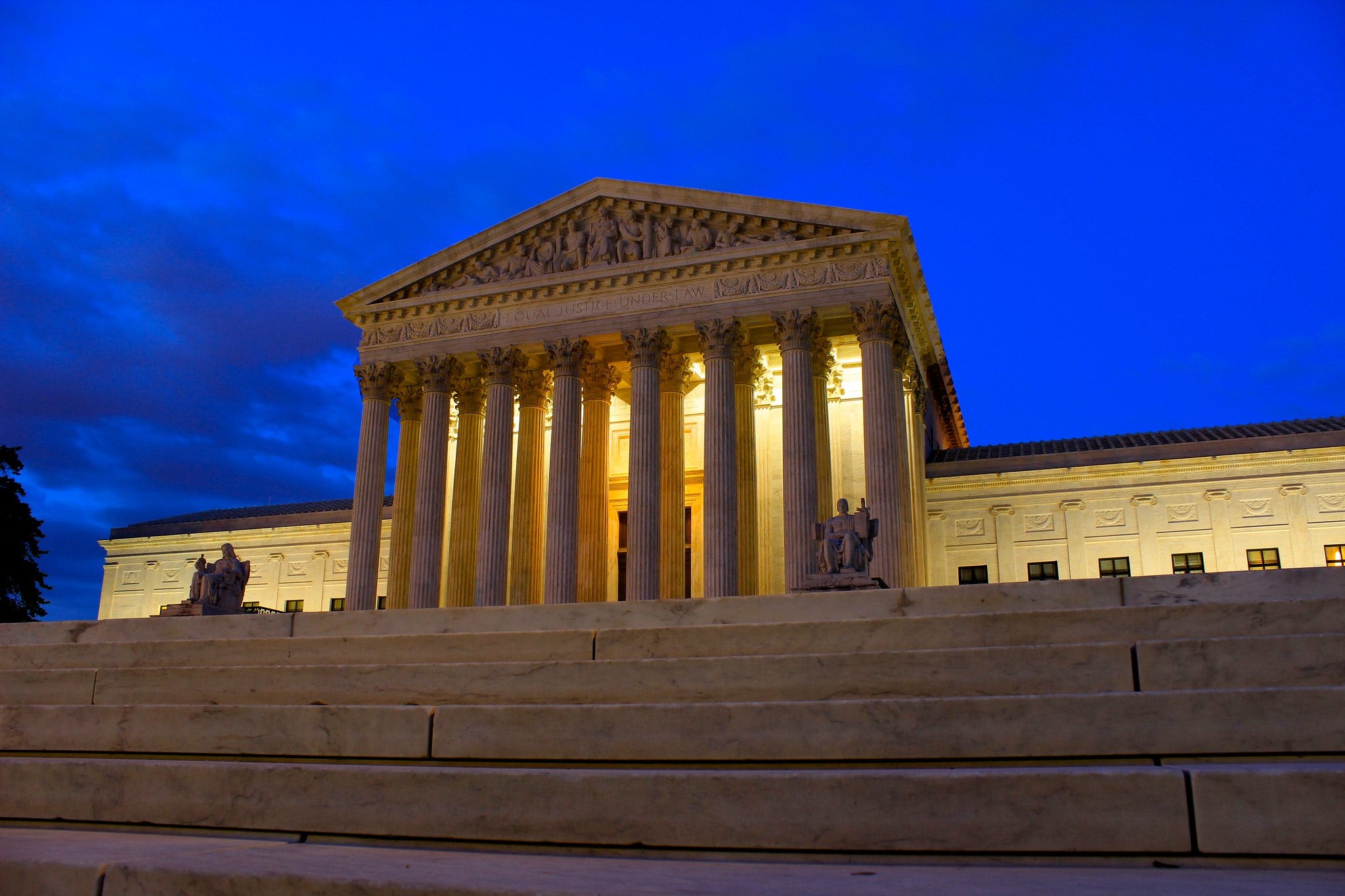
Photo credit: Daniel Huizinga / Flickr, under CC BY 2.0.
George, thank you. You have educated me.
Extremely comprehensive and thoughtful research on this piece. At some point, it will click in, that this isn’t preventing harm, it’s compounding it. And not taking down the powerful, but the powerless. A complete mission drift, almost betrayal.