

Accusations almost always get more coverage than exonerations or vindications. That leaves the accused nominally free and clear, but forever tarnished by the last public words about them. Walter Pichler was cleared of the allegations against him after an 11-month investigation by the US Center for SafeSport, the national sport safe guarding organization. Yet the threats to his reputation and social and professional lives continue to escalate.
Walter Pichler has spent much of his life racing under the gun. Literally. He is an Olympic medalist in the biathlon, and won several national championships in the ski-and-shoot sport for his native country of West Germany (plus a few more in cross-country skiing). After retiring as an athlete, he coached the national biathlon teams for the United States and the United Kingdom, then coached at an elite Nordic sports center in Austria. He and his wife now live in Montana.
Today, he’s once again under the gun, in a race with much graver stakes than Olympic glory.
In 2024, an Associated Press reporter confronted Pichler with allegations made by Joan Wilder, a Team USA biathlete from the late 1980s and early 1990s. Pichler unequivocally denied the accusation to the AP reporter. He knew something further was amiss when the AP article came out several weeks later.
The article cited Wilder’s complaint to the US Center for SafeSport that Pichler assaulted her after “the team went out one night” in 1990.
However, contrary to the AP’s reporting, the Center’s records reveal that Wilder could not pin down the incident to a single year. The Center investigated Wilder’s claim that Pichler entered her “hotel room uninvited and laid on top of [her] and told her he could help her win medals” in either November 1989 or November 1990.
“If there was a party, it wasn’t 1990,” Pichler recalls. “The party was only in 1989.”
How could he be so sure?
Like most Germans of his generation, Pichler knows where he was and what he was doing on November 9, 1989. That’s the day the Berlin Wall came down.
He was in the United States training with a group of American biathletes. One evening, after a day of training, “we were having dinner and suddenly on the news they were saying East Germany opened the borders, and people were coming into the West in a big party. The team and the coaches all said we have to celebrate this. So we celebrated it!”
Elite athletes at a training camp just a few months before their competitive season normally don’t party particularly hard. Needless to say, this was an exception, and the high spirits continued throughout the remainder of camp.
The following November, Pichler was again in the United States with the top American biathletes. But this time, he was their coach. History and geopolitics did not deliver any reasons for celebration, and the camp was much more workmanlike.
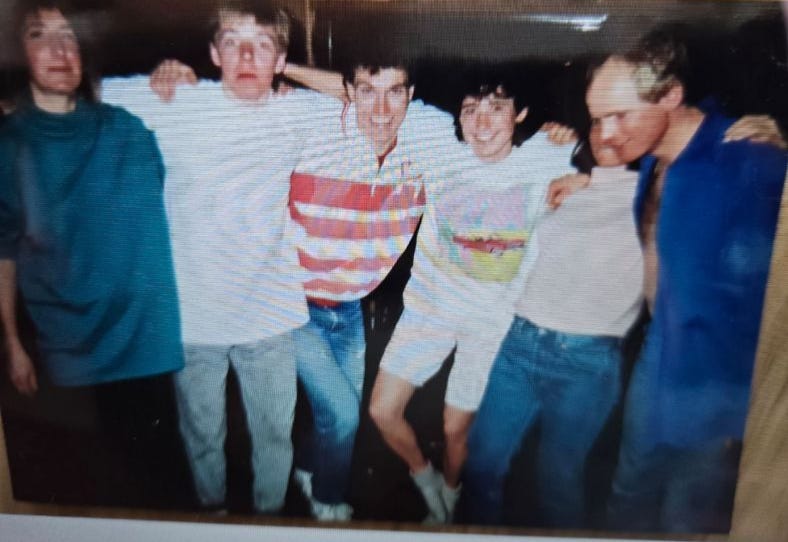
Several of the athletes the US Center for SafeSport interviewed as part of the investigation remembered participating in, or hearing about, the party on the night the Berlin Wall fell. None recalled a similar night of partying or drinking in November 1990. One said there is no way the coaching staff—with Pichler as head coach—would have allowed a party that year.
The Ted Stevens Olympic and Amateur Sports Act of 2017 designated the Center as the national sport safeguarding organization. The Act gives the Center nearly total, unreviewable discretion to define its jurisdiction, set its policies, conduct its investigations, and impose and enforce sanctions. Over 11 million Americans are subject to the Center’s authority. But that is an undercount, partly because of a clause at work here. The Center explicitly rejects any statutes of limitations or time bars, which is how they could take jurisdiction over an event that allegedly occurred more than 25 years before its own existence.
Under the SafeSport Code, the Center applies a “preponderance of the evidence” standard—the “more likely than not,” 51% rule— to any allegation.
After an 11-month investigation, the Center found that there was insufficient evidence to support Wilder’s claim, and that Pichler did not violate the SafeSport Code or relevant law.
This is an exceedingly rare outcome. Since 2017, only 1.7% of the Center’s investigations have ended with a finding of “no violation.” By comparison, 17% of federal criminal defendants who choose to go to trial instead of taking a plea deal (a small minority, to be fair) are acquitted.
Pichler accordingly remains eligible to work in sports. On paper, he is in the same good standing as anyone else. But in terms of his reputation and marketability, he is far from whole. The day after the Associated Press ran their article, the ski manufacturer Kästle ended their two-year consultancy contract with Pichler. A few months later, a new high-performance biathlon club in Montana extended to Pichler the opportunity to work with them. They soon retracted the offer after some prospective members of the club pointed to the top search results for Pichler’s name. He has been unable to find work in sport since.
“My name is damaged forever,” Pichler said. “I’m very disturbed. I’m mentally on the edge. I don’t know what to do anymore.”
And it could get much worse.
While the Center’s investigation was underway, teenage filmmaker Cameron Kirkegaard made a documentary rehashing the allegations against Pichler. The film, which was partially funded by a grant from the Colorado Office of Film, Television and Media, has had only one public screening. That was in October, one month before the Center issued their Notice of Decision. Kirkegaard did not respond to request for comment on whether he would update or in some way edit his film to reflect the US Center for SafeSport’s determination.
A second screening that had been scheduled for mid-January was cancelled pending a legal review. However, that appears to be complete. The film was recently shown at a film festival in Colorado, with another screening scheduled for the end of February.
That screening will be the launch event for a full public release.
Had the Center ruled against Pichler, he would be formally banned, publicly blacklisted, and everyone would know about it. The Center is required by law to “publish and maintain a publicly accessible internet website that contains a comprehensive list of adults who are barred by the Center.” This clause has devastated innumerable lives of American sportspeople, and is without precedent or comparison.
But for Pichler and the few others in his situation, there is no parallel “white list.”
Since receiving his Notice of Decision, Pichler has pleaded with the Center to issue a statement or press release announcing the result of their investigation—anything “official” that can counter the AP’s reporting and the documentary. The Center told Pichler that they do not have any way to publicize those investigations that clear sports people of the allegations against them. The only thing they have is the blacklist, the Centralized Disciplinary Database, so “there wouldn’t be a place for us to be able to publish this information.”
The Associated Press has refused to update their December 2024 reporting with the fact that the Center cleared him of the very allegations contained within that article.
Cancelled individuals often say that they just want something they can give people that will provide the full story. That could be the relevant context of a misinterpreted act or statement; or, as in Pichler’s case, the most recent development, one that upends the entire narrative that precedes it.
A press release or even a social media post from the investigative body would satisfy Pichler and many others like him. To avoid the “Streisand Effect,” where fighting a narrative ends up amplifying it, the Center could ask each cleared individual if they would like a public statement of the outcome.
Media, social media, and search engines do the heavy lifting of cancellations. Institutions like the US Center for SafeSport—or Title IX tribunals, for another—give cancellations an official-looking stamp and formalize the reputation destruction.
There would be wide-ranging benefits if these institutions provided some mechanism of reputational recourse for individuals whom they clear of wrongdoing. Such a statement would provide a modicum of transparency and balance for these feared, opaque, and quasi-judicial power centers. It would help hold the media accountable, testing their professed commitment to the truth and pursuing a story to its end.
For the person involved, public proof of vindication could be valuable during a suit for defamation, tortious interference, or intentional infliction of emotional distress; or in the course of a job interview or simple conversation.
More significantly, it returns to them some level of control over their reputation and, by extension, their future. That’s more than hope—it can be a lifeline.
Related:
No ‘Morning After’ for Victims of Cancellation (Reality’s Last Stand)
First draft, final word: Cancelation, narrative foreclosure, and counter-narrative (Abuse of Process)
Unsafe in Any Sport: The Constitutional and Structural Failure of the U.S. Center for SafeSport (Colorado Law Student Scholars)
Congress’s Sex Abuse Enforcement Body Nailed For Fraud, Pattern Of Misconduct (The Federalist)
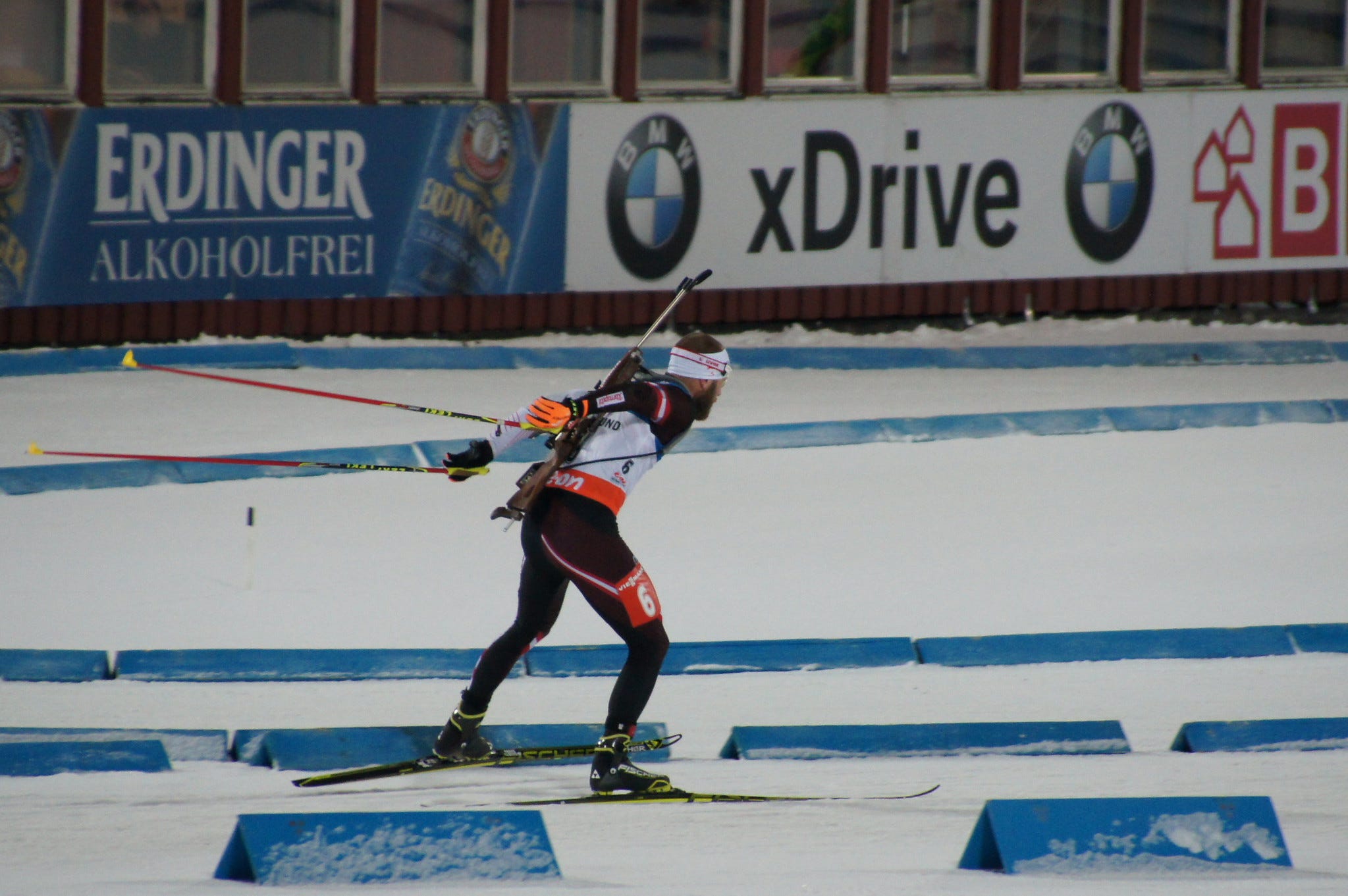
Photo credit: Fredrik Rubensson / Flickr, under CC BY-SA 2.0.
George, I learn so much from you. Yes, why no "white list"? Safe Sport must do better. Is there someone at Safe Sport people can write to? Shame on AP for not updating their report....but I do not have high expectations of the press so I am not surprised.