

Someone not self-righteous, not self-consciously woke, not particularly online warned me recently, in more ways than he knew.
Knowing he is a bit of a Japan-ophile, back in December I had mentioned to him my research into the yakuza banishment ritual, hamon-jo. He asked me what became of that. When I told him that I had published the article not long after we talked about it, he asked me to send it to him. The next time I saw him, he brought it up and it led to me talking about my work on cancellation, something that we hadn’t previously discussed.
I don’t remember exactly what I said as I gave him my overview of cancellation, what I’ve learned, and what I’m doing. But he cautioned me about my word choice: “You shouldn’t use the word ‘hung’ about this, because a lot of black people actually were publicly hung in this country.”
I wasn’t in a position to go Full George and say “Well, I’d say they’re being burned at the stake in a witch hunt, but I don’t want to alienate the feminists. I can’t afford to lose my Catholic readers, else I’d say they were crucified. I know I have some adulteresses in my audience, so I can’t say cancellation targets were victims of a stoning…”
Instead, I just sat with the recognition that six years later, we’re not that far from 2020.
And this was before two sitting Congressmen, two college coaches, and Cesar Chavez (d. 1993) were all taken out via the same playbook that’s ravaged our culture and society for a decade.
Our conversation continued. For the second time in the last few months, I described my work on cancellation to someone completely on the outside, a true normie. Each time, I used some specifics to highlight my points, along with the general overview of what I’ve learned and some of the common experiences—like the prevalence of suicidality, and the ease with which canceled people talk to me about it.
Both times, the other person has said: “I’m sure these people you’re talking to are nice people. I’m sure it really sucked for the person that goes through it. I get that you have a lot in common with them. But...”
But it wouldn’t have happened if they hadn’t done something.
But these things don’t just go down for no reason.
But you don’t get to that sort of position without doing, or at least tolerating, or at least benefiting from some pretty awful things.
To summarize their positions: where there’s smoke, there’s fire, and if you lay down with dogs, you’re gonna get fleas.
These conversations clarified for me that we are still in the moral panics of 2020, the zenith of the Age of Cancellation. Despite all the purges and so-called reckonings, the same hatreds are searching for a target, and the same guilts seek expiation.
For the last year, I’ve been working under the assumption that the steepest challenge I face is establishing that cancellation is a legitimate form of trauma. I would have to show the wreckage that I’ve seen and heard in so many canceled people, relaying the gut punches that I feel when they tell me their stories, and somehow adequately conveying the whole-of-existence damage that they continue to experience, years later—and back it up with neuroscience, several sub-disciplines of psychology, psychiatry, history, literature, evolutionary biology, and more.
I’m realizing now that those are down-the-road topics.
Actually, it’s worse than that.
Describing the trauma is a trap, because a good number of people will read it and say what my acquaintances said above. Or, worse, they’ll say “Good!” and I’ll have inadvertently delivered cancel culture snuff. Moral panic porno.
If showing the individual costs and consequences of cancellation risks backfiring, what needs to come first?
Soon after the collapse of East Germany in late 1989, the Stasi—the East German secret police—began burning as many of their files as they could. Citizens and governments stepped in to stop the destruction, knowing that these were important historical records and would be necessary for national reconciliation and integration. After East and West Germany unified in 1990, the German government established the Stasi Records Agency to reconstruct and preserve as much of the Stasi’s documents as possible.
East German pastor, activist, and politician Joachim Gauck was appointed the first Federal Commissioner for the Stasi Records, and the agency became known as the Gauck Authority.
The Gauck Authority permitted German citizens—from both East and West—and foreigners to view their Stasi file, subject to pretty minimal redactions. People would then find out who informed on them, for how long, on what topics, what operations the Stasi may have planned or carried out against them, how high up their case went, and so on.
Germans learned that siblings, spouses, and best friends were informing on them. “The effect of reading a file can be terrible,” Timothy Garton Ash wrote.
Garton Ash is a British journalist and historian who moved to West Berlin in 1978, and spent considerable time in East Berlin and the rest of East Germany through 1982. He wrote The File in 1998 about his experience viewing his Stasi file, and then confronting the former friends, colleagues, and acquaintances who informed on him.
“Painful encounters, truth-telling, friendship-demolishing, life-haunting,” is how he described the effects of reading one’s file and then facing one’s informants.
“Hundreds, thousands of such encounters, as the awful power of knowledge is slowly passed down from the Stasi to the employees of the Gauck Authority, and from the employees of the Gauck Authority to individuals like me, who then hold the lives of other people in our hands, in a way that most of us would never otherwise do.”
Being publicly outed as a Stasi informer carried significant social and professional consequences post-unification. Someone who was “gaucked” or found to be “gauck-positive” could be denied or stripped of employment in academia, the government, or other high profile jobs, in addition to public disgrace.
Rightly so, many would argue. Being informed upon was not a trivial matter. The information provided to the Stasi could lead to prison, torture, and execution. “I was not a victim of these informers, as many East Germans really were of theirs. They did me no serious damage. Yet, knowing how the system worked, I may fairly guess that they did harm others.”
Given the opportunity to gauck one of his informers, Garton Ash wrote “What a responsibility!… I can, if I choose, ruin a man’s career, perhaps even his life. For [being an informant] is the kiss of death. What earthly right have I to play judge and hangman?”
After showing a former friend the proof of what she had done to him, he wrote “[T]his will haunt her. Not, I think, because of the mere fact of collaboration—she was, after all, a communist in a communist state—but because working with the secret police, being down in the files as an informer, is low and mean.”
Reading accounts of cancellations, or going back and reading the articles, petitions, and social media posts that cancelled people, exposes just how low and mean they were. The accusations range from the frivolous to the delusional, unfounded and suffused with malice…
“It’s like they were complaining about their Thanksgiving dinner,” a well-placed passive participant in Michael Capiraso’s cancellation told him five years later.
I’m still fuzzy on the forensics of “neon lit white savioury fuckery,” but I do know that phrase figured prominently in Kate Clanchy’s cancellation.
Three years after Ed Roos’ cancellation, an independent investigation found that not only did he not “cage” a student in a school gymnasium big enough to hold a basketball court, but the accuser who took her story to NPR and The New York Time was, under basic questioning, “unable to recall specific dates, times, or details to support that the incidents occurred or to support a finding of discrimination... The investigator was unable to find any supporting evidence for those allegations.”
Teenage athletes were reported to the national sport safe guarding agency because they spoke up for their coach, whom they knew to be the subject of malicious accusations by the same accusers.
The people in charge of a local theatre awards show in Chicago are being canceled because the awards didn’t sufficiently cancel some members of the local theatre community.
I could go on.
…and yet the consequences are gravely serious. Many canceled people are still deep in despair, suicidal, abusing drugs and alcohol, un- or under-employed, selling assets and draining accounts just to get by. Others are already prematurely deceased.
But another cycle of cancellations—“gaucking” everyone who played any role—won’t get us anywhere.
It would be a pretty easy coding gig for a freelancer on Upwork or Claude the AI to generate a spreadsheet of everyone who wrote the articles for national or local media, filed official reports, signed the petitions, or shared the social media posts that contributed to someone’s cancellation.
But another cycle of cancellations—“gaucking” everyone who played any role—won’t get us anywhere. Cancellations are intrinsically wrong because they emerge from and are a tool of the mob, usually during a moral panic. Well-vetted targets and good aim do not legitimize cancellations.
Cancelers need to recognize how low and mean their actions were. They need to be haunted by how low and mean they themselves were. The passive participants, those who are going on several years of choosing not to say anything when they could have (the second-best time is now), should similarly feel their lack of integrity.
The non-canceled, the neutrals, the normies, like the two I started this article with, need to feel relief. Yes, that they weren’t themselves canceled, but more so that they didn’t participate, such would be their shame.
The cancel mobs cannot coast into myth.
The cancellers are not—and never were—crusaders or avenging angels.
They are not Robin Hood, the MacManus Brothers, or Dexter Morgan. If nothing else, those characters were meticulous in their target selection and clinical in their, well, execution.
Cancellations did not right any wrongs or hold anyone accountable (remember the risible “It’s not cancel culture, it’s accountability culture”?).
Cancellations were not vehicles of justice precisely because they were so indiscriminate and random. The post hoc justifications of my acquaintances are just that. These rationalizations go even further than Laurenty Beria: find me the CEO or head coach, and I’ll find you the social transgression and skeletons in their closet. If we can’t find any, we’ll attach someone else’s to them. Whose? Anyone’s. Close enough.
Once we’re on the same page about the lowness of the means, then we can talk about consequences, trauma, and the more interesting stuff.
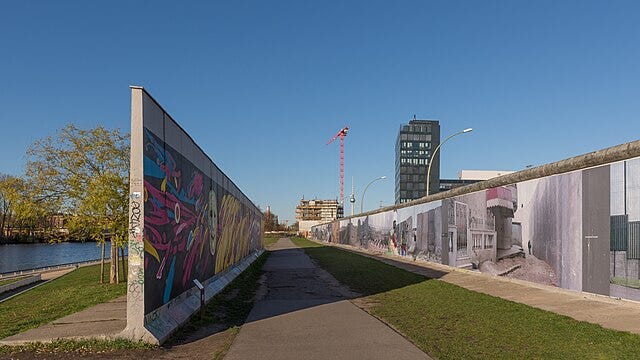
Photo credit: Arild Vågen / Wikimedia Commons, under CC BY-SA 3.0.
Despite knowing that the media is usually biased, most people read things from "respected sources" and accept them as factual, especially on topics that they are not well versed on. Media is always quick to share and cross-post a persons cancellation story, but never publish the story that exonerates the cancelled person. Great topic and look forward to your exploration of it in the future. I think the future of coaching depends on un-muddying these waters.
Great post George. Accusations have become the new guilty: innocent until accused. There's also the issue of the punishment not fitting the incident. The incidents vary but the punishment is typically loss of your career, unemployable, loss of your ability to provide for your family, deep depression, torn apart families, suicide ideation, and death (RIP Richard Bilkszto). I wish our country would adopt stricter defamation/libel laws to stop this madness.